Almost everyone falls in love with the same image: a stone farmhouse, a cypress-lined drive, a glass of Chianti by the pool. But choosing among the many Tuscany villas available is harder than it looks. The region stretches from hill towns an hour from Florence to wild southern coastline, and the month you pick changes the experience as much as the property does.
This guide breaks the decision into manageable pieces. We compare the main villa areas — Chianti, Val d’Orcia and southern Tuscany, plus the coastal Maremma and Etruscan Coast — then look at which seasons offer the best mix of weather, price and availability. You’ll also find advice on matching the villa type to your group, spotting a genuinely good rental before you book, and a short wrap-up to pull your plan together.
Chianti: Vineyard Living Between Florence and Siena
Chianti is the classic choice for travelers who want rolling vineyard scenery without giving up easy city access. The area sits between Florence and Siena, and most villa locations put either city within a 30-60 minute drive. That means you can spend a morning at a museum or market in Florence and still be back at your pool by late afternoon.
You won’t be isolated, either. Hilltop villages like Greve in Chianti and Castellina in Chianti act as practical bases for daily life, with small shops, weekly markets and family-run trattorias all within a short drive of most rentals. Stocking the kitchen or grabbing a casual dinner rarely becomes a logistics project.
What the villas are like
Expect classic stone farmhouses and restored estates set on working vineyards rather than beach-style properties. Many come with terracotta floors, beamed ceilings and shaded loggias, and some sit among vines that are actively harvested each fall. If your priority is wine-country atmosphere with both of Tuscany’s most famous cities within easy reach, Chianti delivers it more reliably than any other area.
Val d’Orcia and Southern Tuscany for Slow, Scenic Stays
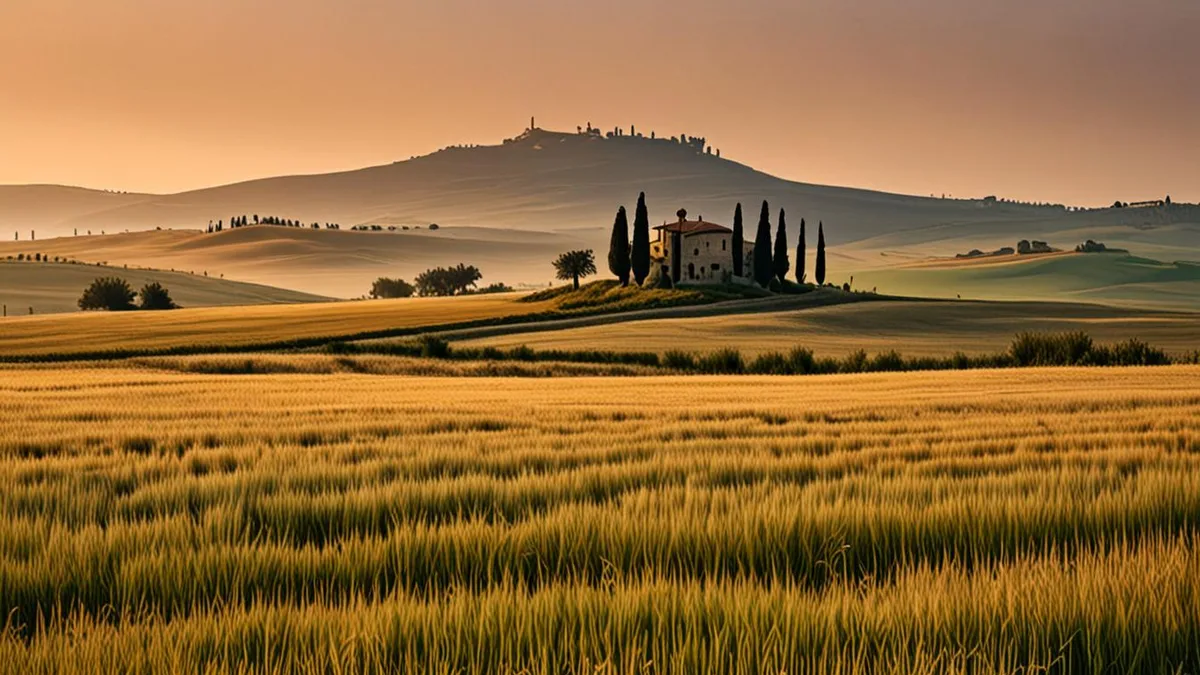
Val d’Orcia, about 1.5-2 hours’ drive south of Florence, is the part of Tuscany you’ve probably seen in photographs: bare ridgelines, winding roads lined with cypress trees and isolated farmhouses on hilltops. This is the right area for travelers who prioritize landscapes over city day trips. Once you’re here, you’ll want to stay put rather than commute back to Florence or Siena.
Towns worth basing yourself near
Pienza and Montepulciano anchor the area with Renaissance streetscapes and working wine cellars. Pienza is compact enough to explore in an afternoon, while Montepulciano’s steep main street leads to cellars where you can taste the local reds without driving anywhere. Smaller villages nearby add bakeries, cafes and weekly markets to your routine.
Why longer stays work best
Distances to major cities limit quick excursions, so this area rewards travelers planning a week or more. With a longer stay, the pace shifts: morning walks, long lunches, wine tastings and slow drives between viewpoints replace the day-trip checklist. If that rhythm sounds appealing rather than restrictive, Val d’Orcia will likely be the highlight of your trip.
Coastal and Southern Options: Maremma and the Etruscan Coast
For travelers who want sea as well as hills, southern Tuscany offers two distinct options. Maremma is the wilder, less developed stretch of coastline, with pine forests, long sandy beaches and a more rugged feel than the polished resorts further north. It also tends to be more affordable, with lower villa prices than the northern coast, and its July-August nights average warmer than the hill towns, which suits travelers who like warm evenings by the water.
The Etruscan Coast alternative
The Etruscan Coast, north of Maremma, suits travelers mixing beach days with hill-town visits. You can swim in the morning and drive inland to medieval villages and archaeological sites in the afternoon, without the long transfers that separate the coastal resorts from central Tuscany’s hill towns. It’s a practical compromise for groups with mixed interests.
Timing your coastal booking
Coastal villas peak in demand during school summer holidays, especially late July and August, when families dominate the calendar and the best properties go first. If you’re set on a specific beach area in those weeks, start your search early and expect limited choice. Shifting your dates to June or early September usually opens up more options along both stretches of coast.
Best Seasons to Book Tuscany Villas
Timing makes a bigger difference to a Tuscany villa trip than almost any other choice you’ll make. The same property can cost dramatically more, feel twice as busy and book out months earlier depending on when you go. A villa that feels serene in May can be a scramble for pool loungers in August, and the difference in price between those two weeks often pays for a second car or a private dinner.
June through August is peak season. Expect rates roughly 30-50% above shoulder months, crowded approach roads around popular towns, and the kind of midday heat that sends everyone to the pool. It’s the best choice if you want long evenings outdoors and lively summer festivals, but you’ll share the region with the most visitors, and the most desirable properties with big pools and shaded gardens are the first to disappear.
May and September-October are the sweet spot for most travelers. Days typically sit between 18-26°C, the countryside is at its most photogenic, and the vendemmia brings a genuine harvest atmosphere to wine areas. Availability is also easier to find, and owners are often more flexible on arrival days and stay lengths, which matters if your flights land midweek rather than on a Saturday.
Matching the Villa Type to Your Trip
Not every villa suits every trip, and the right match depends on who’s traveling with you. A property that’s perfect for a couple’s anniversary week can feel cramped for two families, and vice versa.
Couples usually get the most from compact converted farmhouses in Chianti or Val d’Orcia. These smaller properties offer real privacy around the pool and an intimate base for slow mornings, without paying for bedrooms you’ll never use.
Larger groups do the math differently. Renting an entire estate with a shared kitchen often works out cheapest per person, especially outside peak season when owners have more incentive to negotiate on longer stays. Everyone gets a bedroom, and the common rooms become the heart of the trip.
Families with children often gravitate toward agriturismo-style stays. These working farms typically offer plenty of outdoor space, animals to visit and casual on-site dining, which takes the pressure off planning dinner with tired kids every night.
- Confirm the pool season before booking: most unheated pools open from May to early October, so a “heated pool” question is worth asking if you’re traveling in the shoulder months.
- Count bathrooms, not just bedrooms: group harmony often depends on enough showers for everyone’s morning routine, so check the layout floor plan carefully.
- Ask about kitchen equipment for big groups: a shared kitchen should have an oven and refrigerator capacity to match the guest count, not just a standard apartment setup.
- Look at bedroom configurations: some estates offer twins or children’s rooms, which matters more than a panoramic terrace when you’re traveling with young kids.
How to Spot a Genuinely Good Tuscany Villa
Tuscany villa listings can look remarkably similar in photos, so the difference between a great stay and a frustrating one usually comes down to details the pictures don’t show. Wide-angle lenses make tiny kitchens look generous, and a well-timed shot can hide a busy road just beyond the garden wall. Since you’ll often be booking months in advance and paying a substantial deposit, it pays to interrogate every listing before you commit. A short checklist helps you sort genuinely good properties from cleverly shot ones.
- Verify drive times to your priority towns. Don’t take “near Siena” at face value—it can mean anything from 20 to 70 minutes depending on the roads. Use a mapping tool with the villa’s actual location and check the route to the towns you’ll visit most.
- Check cooling arrangements for summer. In July and August, hill-town nights stay warm, so look for air conditioning or at least thick stone walls that keep interiors naturally cool. Ask which rooms have it, not just the listing headline.
- Read reviews specifically for road access. Many rural villas sit at the end of unpaved gravel tracks, which matters if you’re renting a small car or arriving after dark. Previous guests usually mention this.
- Confirm what’s included in the price. Heating in cooler months, midweek cleaning and final cleaning are charged separately at some properties. Get the full cost picture before comparing villas, or you may be comparing two different price points.
A few extra questions are worth asking directly. Confirm whether the pool is private or shared, and whether it’s heated or unheated—this changes how usable it is outside the warmest months. Ask about the nearest grocery shop and restaurant, since some countryside properties are a fifteen or twenty minute drive from either. If you’re traveling with a group, check how many bedrooms have private bathrooms rather than assuming the listing photo set tells the whole story.
Take twenty to thirty minutes with this list before booking and you’ll filter out most of the properties that generate complaints. Good owners and agencies answer these questions promptly and precisely; hesitation or vague replies are themselves useful signals. The genuinely well-run villas stand up to scrutiny without any pushback.
Wrapping Up Your Tuscany Villa Plan
Choosing a Tuscan villa comes down to matching the area to the trip you actually want. Chianti suits wine-country travelers who want both cities close by, Val d’Orcia rewards slow, scenic stays away from city day trips, and Maremma suits travelers dreaming of coastal summers. Once the area is clear, the right month follows naturally.
For most travelers, May and September-October hit the sweet spot: mild days around 18-26°C, gentler rates and a calmer pace than the summer rush. If you are flexible, timing your stay around the vendemmia in mid-September to mid-October adds harvest atmosphere to those shoulder-season advantages. Set on June to August? Expect peak rates and crowds, and plan to book 6-9 months ahead for the widest choice. Work out your priorities first, then book with confidence. If this helped you plan your trip, leave a comment or share the article with a fellow traveler.