Scrolling through glamping photos, it’s easy to think a yurt, a safari tent and a cabin all promise the same thing: a cozy bed, a scenic view and a break from ordinary hotels. In practice, they feel very different. A yurt vs safari tent vs cabin comparison comes down to how much comfort you need, which season you’re traveling in and how much you want to spend per night. Pick the wrong one and you might spend a chilly night in canvas when you really wanted a heater and a private bathroom.
This guide breaks down what each stay type is actually like, from sleeping capacity and amenities to how they handle weather. We’ll compare comfort levels, typical nightly price ranges and how far ahead you should book for peak summer dates. By the end, you’ll know which option matches your trip, whether that’s a canvas adventure or something closer to a traditional hotel stay.
What Is a Yurt Stay Really Like?
A yurt is a circular canvas structure topped with a domed skylight, and that skylight is often the highlight of the stay. Lying in bed and watching stars through it is a genuinely memorable experience. Most yurts are set up for 2–4 guests, which makes them ideal for couples or a small family who don’t mind sharing one open space.
The honest answer to what a yurt stay is really like: it sits much closer to camping than to a hotel. Bathroom blocks are usually shared, and climate control is minimal. The canvas walls are part of the charm, but they also flex in the wind, which some guests find cozy and others find noisy. You’ll hear the weather, feel temperature swings between afternoon and night, and pack layers even in summer.
When a yurt is worth it
Yurts are typically the best value of the three, with nightly rates in the $90–200 range. That price makes sense for calm, dry nights, which is why yurts suit late spring or early autumn trips best. If your dates fall in a reliably mild, dry window and you like the idea of a camping trip with a real bed and a roof dome, a yurt is a great pick. If you want guaranteed warmth, privacy and quiet no matter the forecast, look at the other options.
Safari Tents: Resort Comfort Under Canvas
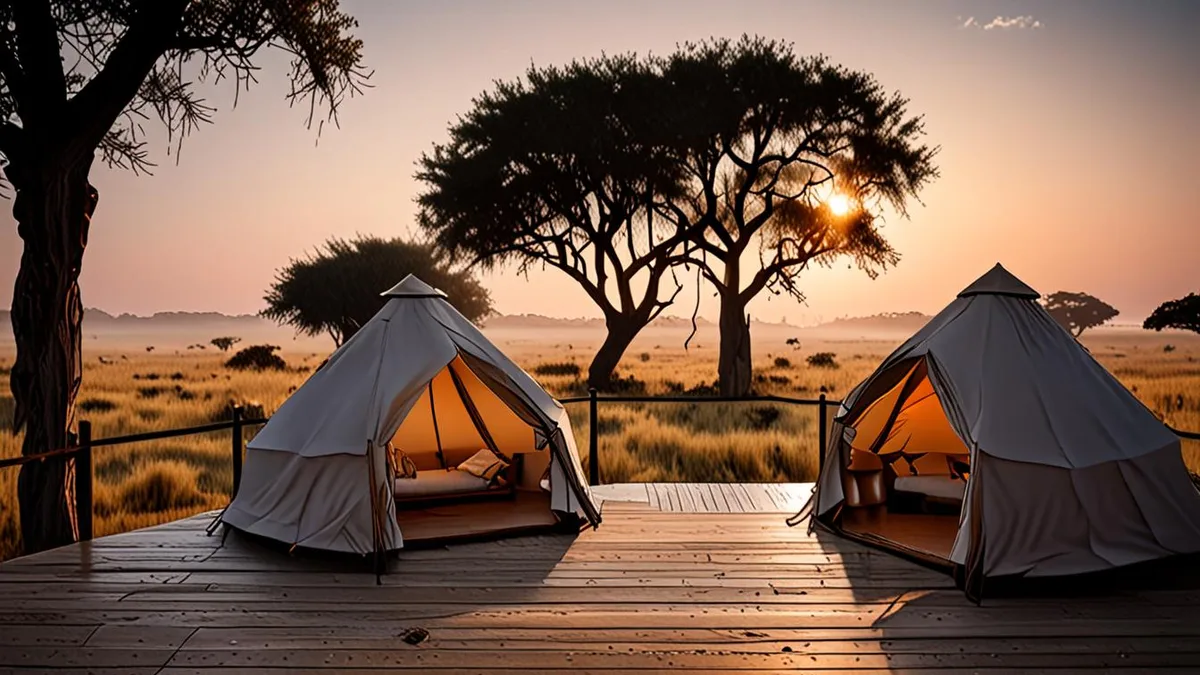
A safari tent is what happens when a canvas tent grows up. These are large canvas structures mounted on fixed wooden decks, typically sleeping 2–5 guests, with nightly prices usually in the $120–350 range. The deck alone changes the experience: you step out onto solid ground, often with chairs or a small table facing the view.
Inside, many safari tents are furnished much like a hotel room. You’ll often find real beds with proper mattresses, rugs on the floor, lighting you don’t have to pump, and sometimes an en-suite bathroom. That last one matters, because it sets safari tents apart from more basic yurts, where a walk to a shared bathroom block is usually part of the deal.
The midday catch
Safari tents shine in warm-weather settings, roughly May through September, when you can leave the canvas flaps open and let the breeze through. The trade-off is that canvas heats up fast at midday. On a hot afternoon, the interior can feel noticeably warmer than the shaded deck outside, so plan activities for morning and evening rather than lounging inside at noon. For couples and families who want hotel-style comfort without solid walls, a safari tent is often the sweet spot.
Cabins: The Closest to a Traditional Hotel Stay
If glamping already feels like a compromise, a cabin removes most of it. Cabins have solid walls, real insulation and heating, and many include AC as well. That construction makes them the only one of the three options that works genuinely year-round, including winter, when canvas stays are cold, damp or simply closed for the season.
Space and amenities are the other big advantages. Cabins typically sleep up to 6 or more guests, often in separate bedrooms, and usually include a private bathroom and a kitchen. You can cook real meals, spread out on a couch, and shower without walking across a field. Nightly rates generally run $130–400, sitting at the top of the glamping price range, though you’re paying for the closest thing to a traditional hotel stay in a natural setting.
The honest trade-off
The drawback is atmosphere. With insulated walls, closed windows and a television, a cabin delivers the least “outdoor” feeling of the three stay types. You won’t hear owls through the walls or watch the sunrise through a skylight in bed. If your priority is comfort, warm showers and a guaranteed good night’s sleep in any season, that trade-off is usually easy to make. If you’re chasing the feeling of sleeping outdoors, canvas is where the magic lives.
Choosing by Season and Weather
Glamping is a seasonal game, and the calendar matters more than most travelers expect. Yurts and safari tents both rely on canvas, which means they perform best in a fairly predictable window: roughly April through October. Outside those months, a canvas stay becomes a gamble with your comfort, and cabins are the option that removes any season restriction entirely.
Weather is the real decision-maker. A cold snap in early May can make a yurt feel like a cooler box, and heavy rain turns the walk to a shared bathroom block into a soggy mission. Strong wind is the other dealbreaker, since canvas walls flex and flap all night in gusty conditions. When any of these are in the forecast, the choice tilts firmly toward a cabin with solid walls and real heating.
Heat is the opposite problem. In July and August, canvas structures absorb midday sun and can feel stuffy for hours until the evening cools things down. If your trip is all about daytime lounging at the site, that matters.
- Shoulder months like April and October often bring frosty overnight temperatures, so pack warm layers and check whether the site provides extra blankets or a wood stove.
- Summer thunderstorms are common in many regions and can flatten the mood of a canvas stay, so look for covered decks or a common lodge where you can wait them out.
- Midday heat in July and August is best handled by booking a shaded site or planning to be out hiking or swimming during the hottest hours.
- Winter trips are really only realistic in a cabin, since most yurt and safari tent operators simply close for the cold season.
Comfort and Amenities Compared
The comfort gap between these three stay types is bigger than the price gap, so it pays to look closely at what you actually get. Bathrooms are the clearest dividing line: cabins almost always come with a private bathroom, safari tents sometimes include an en-suite, and yurts usually send you to a shared bathroom block a short walk away. If midnight trips across a gravel path in a headlamp sound unappealing, that detail alone can decide it.
Cooking follows a similar pattern. A cabin with a full kitchen lets you prep real meals, store cold drinks, and skip restaurant bills. Yurt and safari tent sites typically offer campfires, fire pits, or a communal kitchen, which is part of the charm for some travelers and a hassle for others.
Sleeping quality is the quiet difference. Canvas walls thin out sound and temperature in a way solid walls never will, so expect to hear your neighbors, the wind, and the birds, and to feel the day’s heat and the night’s chill more directly.
- Towels and linens are standard in safari tents and cabins but often limited at yurt sites, so check what’s included before you pack.
- Blackout mornings are rare under canvas, since domed skylights and thin walls let dawn light pour in, while cabins usually have proper curtains.
- Device charging is reliable in cabins and en-suite safari tents, but yurt sites sometimes have outlets only in the shared lodge.
- Coffee setups range from a full kitchen in a cabin to a single campfire kettle, so bring your own gear if caffeine is non-negotiable.
Budget and Booking Timing
Glamping prices vary widely, but the pattern is consistent: yurts are the entry point, safari tents sit in the middle, and cabins take the top spot. Knowing the typical ranges and booking windows can save you both money and disappointment, especially for peak summer dates. The good news is that glamping rarely requires guesswork. Rates are usually published clearly, and the differences between stay types are predictable enough that you can plan a trip budget before you ever contact an operator.
- Match the stay type to your budget. Yurts are generally the cheapest option, safari tents typically run $120–350 per night, and cabins $130–400, so a family of four should also factor in capacity: yurts sleep 2–4, safari tents 2–5, and cabins up to 6 or more. Two smaller units can sometimes cost less than one large cabin, so run the numbers both ways.
- Book early for peak summer. For July–August stays, reserve yurts and safari tents 3–6 months ahead, and cabins 2–4 months out, since the best sites go first. Popular waterfront or view-facing units often sell out before the rest.
- Target the shoulder season for savings. Stays in May or late September often cut canvas-stay prices noticeably, and you’ll share the site with fewer people. Weather is usually still pleasant, though pack layers for cooler nights.
- Compare what’s included, not just the rate. A cheaper yurt with no private bathroom and no kitchen can end up costing more in meals and hassle than a mid-priced cabin. Add up bedding rentals, firewood, and activity fees before deciding.
One last habit worth building: prices and availability shift with demand, so check a couple of booking platforms directly against the operator’s own site before committing. Some owners offer lower rates or extra perks, like a free extra night midweek, for direct bookings. It also pays to sign up for operator newsletters or follow them on social media, since last-minute cancellations are sometimes discounted there first. A few minutes of comparison can easily cover the cost of a good dinner on your trip.
Which Glamping Stay Suits You?
So which one should you book? If your trip falls in the fair-weather window, your budget is tight and you genuinely enjoy the camping feel, a yurt is the easy pick. It gets you under canvas for the least money, as long as you accept shared bathroom blocks and minimal climate control.
If you want that canvas atmosphere but with real beds, rugs and sometimes an en-suite bathroom, a safari tent delivers hotel-style comfort in a warm-season escape. And if you refuse to compromise on comfort, a cabin is the year-round, full-amenity option, with solid walls, heating, kitchens and private bathrooms. Three very different stays, three very different trips. Which one sounds like yours? Tell us in the comments, or share this article with a friend planning their first glamping trip.