Booking a villa with a private pool is one of those travel decisions that looks simple in the photos. Sparkling blue water, sun loungers, complete privacy — but photos can hide a lot. The pool might be shared with another apartment, too cold to swim in outside high summer, or come with heating fees that only appear after you have paid your deposit.
The good news is that a few targeted questions will sort genuinely private, swim-ready pools from disappointing ones. In this guide, we cover how to confirm the pool is truly exclusive to your booking, what to check about heating and water temperature, how to match pool size and depth to your group, which safety features matter, how cleaning and maintenance visits work, and what the real costs look like. We finish with a short pre-booking checklist so you can verify the essentials in writing before paying anything.
Is the Pool Really Private and Exclusive?
The word “private” gets used loosely in villa listings, so treat it as a question rather than a promise. In some properties, the pool sits in a shared garden used by the owner’s family, guests in a second apartment, or another rental unit on the same plot. You may arrive expecting solitude and find someone else’s towels on your lounger.
Get exclusivity confirmed in writing
Before you pay a deposit, ask the owner or agent to confirm in writing — an email is fine — that the pool is for your booking only. This matters most for villas that are part of a larger property, farmsteads with converted apartments, and listings where the owner lives on site. A written confirmation gives you something to fall back on if the reality does not match the description.
Check the plot and the sightlines
Exclusivity is not the same as privacy. Ask whether the pool sits inside a fully fenced, self-contained plot, or whether neighboring properties can see into the pool area. A pool that is yours alone can still be overlooked from a nearby terrace or upstairs window, which changes the feel of the place considerably. Recent guest reviews and ground-level photos often reveal more than the main listing images.
Finally, read the fine print carefully. Wording like “shared pool”, “communal pool” or “pool shared with the owners” is frequently buried halfway down the listing, well below the headline photos. If the description is vague, ask directly rather than assuming.
Pool Heating, Season and Water Temperature
A pool that looks inviting in a July photo can be bracing in April. Unheated private pools in southern Europe are typically swim-ready from May to October, when sun and warm air keep the water comfortable on their own. Outside that window, an unheated pool often sits well below bathing temperature, and children who were promised daily swims may be the first to complain.
Heating costs money — and needs booking ahead
If you are traveling in spring, autumn or winter, ask whether the pool can be heated at all. Where heating is available, it often costs 15-40 euros per day extra, which can add up noticeably over a week or two. Just as important, heating usually must be requested in advance: the owner needs time to switch the system on and bring the water up to temperature, so a last-minute request on arrival rarely works.
Ask for numbers, not yes-or-no answers
Instead of simply asking whether the pool is heated, ask what the actual water temperature is likely to be in your travel month. A heat pump that maintains 26 degrees is a very different proposition from one that adds a couple of degrees to an unheated pool. Owners who heat their pool regularly can usually give you a realistic figure, and their answer tells you how seriously they manage it. If the reply is vague, that itself is useful information — budget for a cool swim or look for a villa with a stronger heating setup.
Size, Depth and Suitability for Your Group
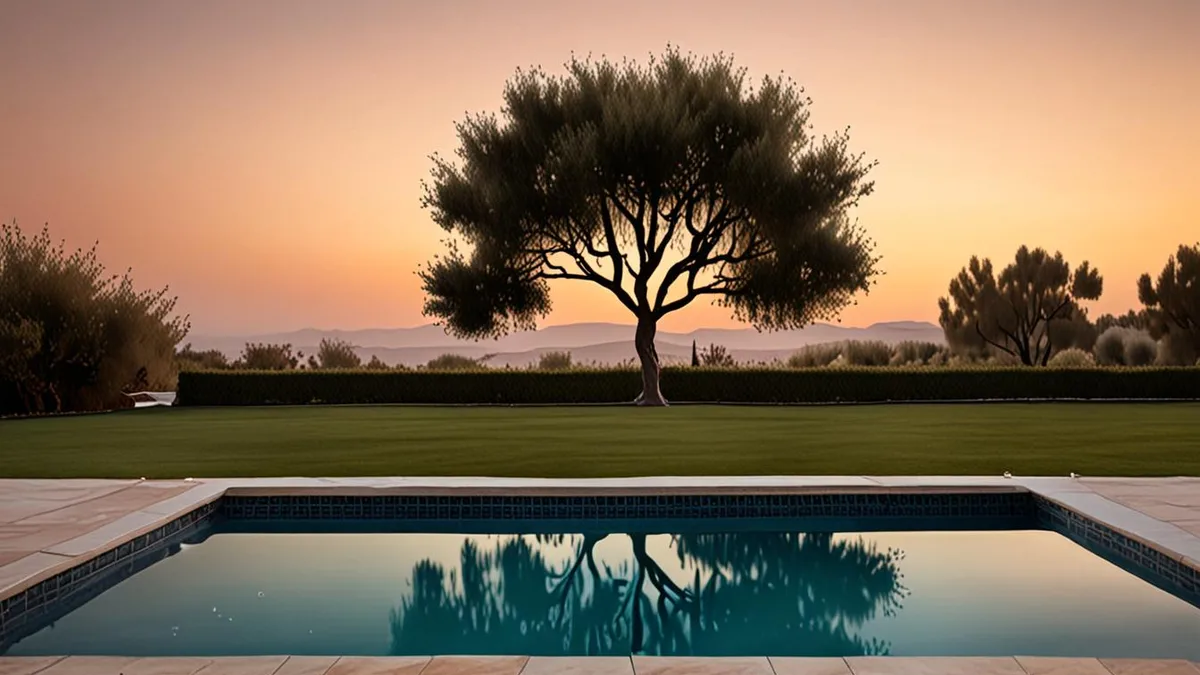
Pool photos are notoriously flattering because there is nothing in the frame to compare the water against. A pool that looks generous in a wide-angle shot may be surprisingly small in person, and size matters more the larger your group. A 6×3 meter pool, a common size for family villas, fills quickly with six adults — fine for lounging and a quick dip, less so for anyone who actually wants to swim lengths. Ask the owner or agency for the exact dimensions in writing, and sketch the footprint out on paper or in your garden to get an honest sense of scale. If the listing only says “private pool,” that tells you nothing about whether four people can share it comfortably.
Depth is the other figure worth requesting. Typical private pool depths range from 1.0 to 2.0 meters, and that range matters enormously if you have non-swimming children. A pool with a 1.5 meter average depth means small children need constant supervision and armbands, even at the edge. A shallow shelf or seated ledge along one side can make a big difference for younger kids and for adults who just want to stand in the water with a drink. Ask for the shallow-end and deep-end figures separately rather than a single average, since a flat deep floor suits swimmers but leaves little safe standing space.
Questions to ask about shape and entry
- Entry type: ask whether access is by steps, a shallow ledge or a gradual beach-style slope, since a ladder-only pool rules out toddlers and can be difficult for older guests with limited mobility.
- Depth profile: request the shallow-end and deep-end figures separately, because a flat 1.5 meter floor suits swimmers but leaves little safe standing space for children.
- Shape and usable space: long, narrow lap pools swim better than compact square ones, while L-shaped designs often separate a shallow children’s zone from the deep end.
- Surroundings: ask about non-slip paving and how much shaded space sits beside the pool, since you will spend plenty of time out of the water too.
Match these details against your group before booking rather than after. A pool that suits a couple on a romantic break can be genuinely awkward for three generations traveling together, so list who is coming and how each person will actually use the water. Think about morning swimmers, teenagers who want space to splash, and grandparents who need an easy way in and out. If anything is unclear, ask for a simple ground-level photo with the dimensions marked, and keep the written answers with your booking confirmation in case the pool does not match what was described.
Safety Features to Verify Before You Book
When small children are coming along, safety features become as important as the pool itself. Many owners list “private pool” without mentioning barriers at all, so you need to ask directly before you pay anything. A beautiful infinity pool can be a genuine hazard for a toddler if there is no fence or lockable access point around it.
It also helps to know how the pool is managed day to day. Most villa pools are unsupervised, meaning there is no lifeguard and you accept responsibility for anyone using the water. Ask whether a rescue ring or reaching pole is kept at the poolside, and whether the villa has any house rules about swimming after dark or alone.
- Fencing and gates: a four-sided isolation fence with a self-closing, lockable gate keeps children away from the water even when the villa door is open behind them.
- Covers and alarms: a rigid safety cover or a surface alarm can add a second layer of protection, but a flimsy solar cover does not count as a barrier.
- Poolside surfaces: ask whether the surround is slip-resistant, especially around shallow play areas, and where loungers, pots or barbecues sit, since hard edges and glassware near the water add risk with energetic children around.
- Realistic photos: request recent ground-level shots of the pool area, since drone or wide-angle images often hide a drop-off, an unfenced terrace or a neighboring property just beyond the hedge.
Finally, ask these questions in writing and keep the answers with your booking confirmation. If an owner cannot tell you whether the pool has a childproof barrier, that silence is an answer in itself, and you may want to look at another villa.
Maintenance, Cleaning and Access During Your Stay
Most villa pools are cleaned 1-2 times per week during a stay, which is completely normal, but it is far better to know the schedule before you arrive. Ask which days the gardener or pool cleaner visits, because an unexpected stranger at the gate can be unsettling if nobody warned you. It also affects how you plan your days, especially if you wanted a quiet morning by the water.
Then find out how access works. Some owners prefer staff to come while guests are out; others will happily work around your plans if you simply ask. If you are traveling with small children who nap at fixed times, or you simply value privacy, ask whether you can choose the timing of the visit.
Who fixes problems mid-stay?
Ask who to call if the pump fails or the water turns cloudy halfway through your week. In warm weather a pool can go from clear to unswimmable within a couple of days, so a slow response can cost you several swimming days. A good host will give you a local contact number, the name of the maintenance company and a realistic response time.
Get these details in writing along with your booking confirmation. If the owner hesitates or gives vague answers about cleaning days and emergency contacts, treat it as a warning sign. Well-run villas answer these questions easily, because they have a routine in place and nothing to hide.
Budgeting: Rates, Deposits and Hidden Pool Costs
Before you fall in love with a listing, make sure the price you are comparing is the price you will actually pay. Family pool villas in the Algarve or Tuscany commonly range from 120-350 euros per night in shoulder season, but the headline rate rarely tells the whole story. Heating, towels and deposits can shift a “cheap” villa well above a pricier one once everything is added up.
The extras that surprise travelers
Pool heating is the classic hidden cost, often charged per day and only available if you request it before arrival. Pool towels are sometimes included and sometimes rented, and refundable deposits can be several hundred euros held against your card. Add all of these to your budget before comparing prices, so you are weighing like against like.
Timing matters just as much as the rate. For July and August in popular regions, the best pool villas sell out first, so book 4-6 months ahead if you want real choice rather than what is left over. Shoulder-season weeks offer far more flexibility and often the same villa for noticeably less.
If you are considering the Portuguese coast specifically, it helps to read up on what a villa stay there actually involves, from contracts to arrival logistics, in this guide to renting a villa in the Algarve. A little research before you pay the deposit is the cheapest part of any villa holiday.
Your Pre-Booking Pool Checklist in Short
A sparkling pool in the listing photos can hide a lot: water that is too cold to enjoy, access shared with other guests, and fees that only appear at checkout. That is why the smartest move is to verify the details before you pay the deposit, not after. A few direct questions to the owner or agent will save you from disappointment on arrival day.
In short, get the essentials in writing: confirm the pool is exclusively for your booking, agree on the heating terms, and check the depth and safety barriers suit your group. Know the cleaning schedule and who to call if something goes wrong during your stay. Finally, budget for any heating fees, and remember that for July and August in popular regions, the most desirable pool villas are typically reserved around 4-6 months in advance, so plan early. Have a question or a villa pool tip of your own? Leave a comment or share this article.