If you have never stayed at a safari lodge in Kenya, the whole idea can feel vague. You probably know there will be animals and a guide, but what does an actual day look like? When does someone knock on your door, how much time do you spend in a vehicle, and what happens between drives?
This guide walks you through the full experience, from the early morning wake-up call with tea to the evening campfire after dinner. We cover how game drives work, what the rooms and meals are really like, when to go and how far ahead to book, what a typical lodge costs, and a practical packing and health checklist for first-timers. By the end, you will know exactly what to expect on your first safari lodge stay, so the only surprises are the good kind, like a leopard strolling past your vehicle.
What a Day at a Safari Lodge in Kenya Really Looks Like
Your first morning sets the tone for the whole trip. Most lodges send a staff member to knock on your tent or room door around 5:30 to 6:00 am, often with a tray of tea or coffee and biscuits. It feels brutally early on day one, but you quickly understand why: animals are most active in the cool hours, and the light at sunrise is unbeatable for photos.
Two drives a day, with a long break in between
Game drives usually run twice daily, roughly from 6:00 to 9:30 am and again from 4:00 to 6:30 pm. The morning drive is when predators are on the move, so lions, leopards and cheetahs are most likely to be seen hunting or feeding. The late afternoon drive ends at sunset, often with a sundowner drink at a scenic spot before you head back.
Between roughly 11 am and 3:30 pm, the lodge goes quiet. Animals rest in the heat, so there is little point driving around. This is your window for a long lunch, a swim, a nap on your private deck or simply watching the waterhole from the viewing area. Many first-timers say this downtime becomes their favorite part of the day.
Evenings around the fire
Dinner is typically served around 7:30 pm, often family-style with other guests or at your own table depending on the lodge. Some properties light a campfire before or after the meal, and a few arrange a special bush dinner under the stars at least once during your stay. After dinner, staff escort you back to your room, since walking alone after dark is not allowed in most camps.
Game Drives: Vehicles, Guides and What You’ll See
Game drives are the heart of any safari, and the setup is simpler than you might expect. Most lodges use open-sided or pop-roof 4×4 vehicles, which give you unobstructed views and let you stand up to photograph over the roof. A typical vehicle carries 4 to 8 guests per guide, so everyone gets a window seat and a fair share of viewing time.
As for what you will actually see, the Big Five, meaning lion, leopard, elephant, buffalo and rhino, are realistic sightings in famous parks like the Maasai Mara, Amboseli and Tsavo. That said, sightings vary by day and season, and no honest guide will promise you a leopard. Some days deliver all five; other days you trade a rhino for a fascinating hour watching hyena cubs at their den.
Guides are far better connected than most visitors realize. They use radio networks to share animal locations across vehicles, which is how a sighting of a fresh lion kill can draw several cars within minutes. Drives also follow park rules on keeping a respectful distance from animals and where off-road access is allowed, so good guides never chase or crowd wildlife.
Beyond the standard drive, most lodges offer optional extras that usually cost extra, such as:
- Hot air balloon safaris: an early-morning flight over the savanna, typically ending with a champagne breakfast on landing, popular in the Maasai Mara.
- Maasai village visits: a guided cultural experience where you can see traditional homes, hear about daily life and buy beadwork directly from artisans.
- Guided bush walks: where lodge rules and local conditions allow, a walking safari with an armed ranger gives you a completely different perspective on tracks, plants and smaller creatures.
These add-ons are booked through the lodge, so ask about availability and current prices when you check in rather than assuming they are part of your rate. If you have experienced resort-style stays elsewhere, such as an all-inclusive lodge in Costa Rica, note that safari extras usually work the same way: the base package covers meals and drives, while special activities are billed separately.
Rooms, Meals and Lodge Facilities
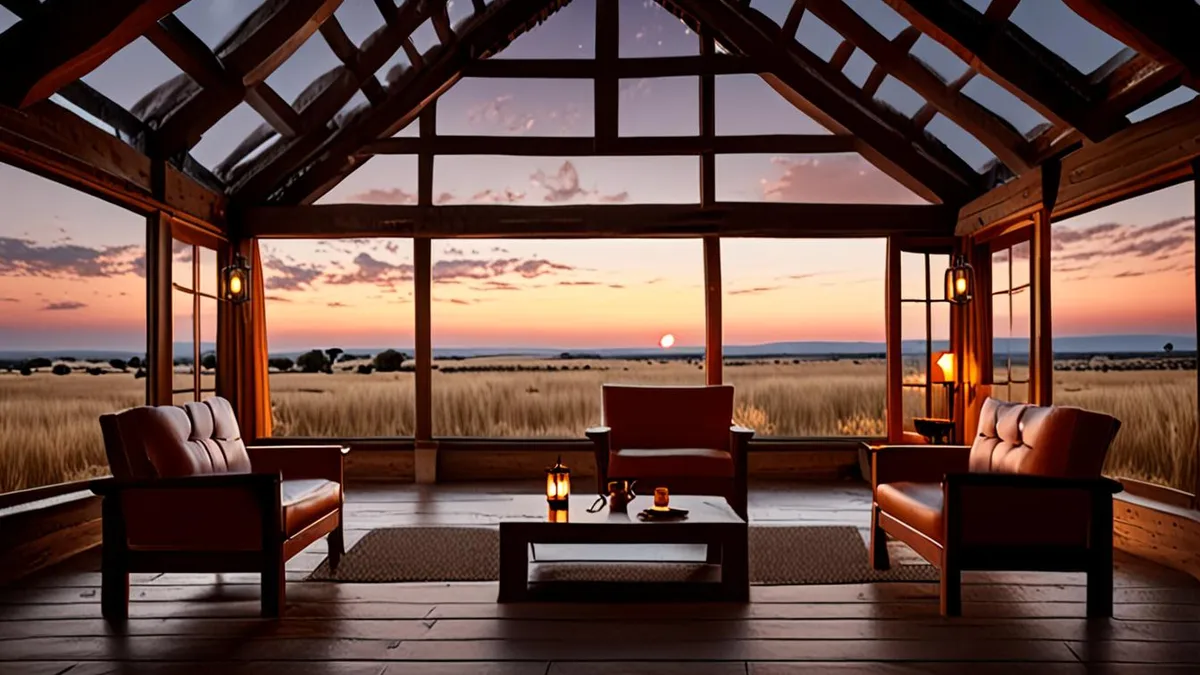
First-timers are often surprised by how comfortable safari accommodation has become. Options range from classic tented camps with real canvas walls, where you can hear hippos or hyenas at night, to solid stone cottages and luxury suites with private plunge pools overlooking the plains. Even the tented camps usually have proper beds, en-suite bathrooms and a small deck, so you are camping in comfort rather than roughing it.
Meals and what your rate includes
Full-board rates typically include three meals a day, and the food is generally better than people expect: fresh fruit, baked breads, hearty dinners and often a barbecue or bush lunch during your stay. Dining arrangements vary by property. Some lodges seat all guests together at shared tables, which is a great way to swap sighting stories, while more intimate camps offer private dining on your own deck.
Connectivity and facilities
Expect hot showers, charging points in your room and Wi-Fi in the main areas, though connectivity is often slow or limited to the lounge and dining area. Treat the trip as a chance to disconnect, and download offline maps or entertainment before you arrive. If you absolutely need to work, ask the lodge about their signal strength when booking rather than assuming.
Common facilities include a pool for that long midday break, a viewing deck or waterhole hide, a bar and a fire pit where guests gather for drinks before dinner. Many lodges also have a small gift shop and a curio or lending shelf. The rhythm of the day, early drives, lazy afternoons and evening fires, makes these shared spaces a bigger part of the experience than you might think.
When to Go and How Far Ahead to Book
Kenya is a year-round destination in theory, but your experience at a lodge changes a lot depending on when you arrive. The country has two dry seasons: late June to October, and a shorter one in January to February. The long rains fall between March and May, and that window shapes everything about pricing and availability.
If seeing the Great Migration is your priority, aim for July to October. That is when enormous herds of wildebeest and zebra move into the Maasai Mara, and predators follow them closely. The trade-off is real: this is the most expensive stretch of the year, camps fill up quickly, and popular sightings can draw several vehicles. January to February is the smarter pick if you want good wildlife viewing with fewer people around. Animals still gather at water sources in the dry weather, and rates drop noticeably compared to migration season.
Try to avoid the long rains of March to May. Some camps close entirely for the season, and roads in the parks turn muddy, which can make drives slower and shorter. If you do end up traveling then, expect lush scenery and very low rates as compensation.
Timing your booking matters as much as timing your trip. It is the same principle I described in our guide to how far ahead to book a lodge for the northern lights: the more specific your dates and the higher the demand, the earlier you need to commit.
- July to October travel: reserve 6-12 months ahead, especially if you want a specific camp inside the Maasai Mara rather than a property on its edges.
- Other seasons: booking 3-6 months out is usually enough, and last-minute deals do appear in quieter months if you are flexible about which lodge you stay in.
- Length of stay: plan 3-4 nights so you can cover at least two areas, or one area plus rest days, rather than rushing a single overnight.
- Shoulder-season advantage: January to February often means more availability at the same well-located camps that sell out during migration.
What a Safari Lodge in Kenya Costs
Safari lodge pricing in Kenya is easier to understand once you know what is bundled in. Most properties quote rates on a full-board basis, meaning your accommodation, three meals a day and usually the shared game drives are included. Mid-range full-board lodges run roughly $200-450 per person per night. At that level you get comfortable rooms or tented accommodation, good food and a professional guiding team.
Luxury camps charge $600-1,200+ per night. The jump in price buys you things like private vehicles for your own group, butler-style service, designer interiors and far fewer guests per vehicle. Some of the top-end camps also include higher-end drinks in the rate, but never assume that; ask what the quoted price covers before you pay a deposit.
The sticker price is rarely the whole story. Park or conservancy entry fees, drinks, laundry, tips and flights between parks are usually billed separately, and these extras add up faster than most first-timers expect. Park and conservancy fees change regularly, so check the current rate for the specific reserve you are visiting rather than relying on an older blog post.
- Airstrip transfers: most lodges sit 20 minutes to 2 hours from the nearest airstrip by 4×4, and the transfer is often included in the rate, but confirm it in writing when booking.
- Conservancy vs national park: staying in a private conservancy usually carries its own entry fee, which may be added to your bill rather than paid at a gate.
- Internal flights: light aircraft hops between parks are priced per person and per route, and luggage limits on those flights are strict, so factor them into your budget early.
- Drinks and laundry: at mid-range lodges these go on a tab settled at checkout, so keep a rough running total during your stay to avoid surprises.
Packing, Health and Practical First-Timer Tips
Packing for Kenya is all about handling temperature swings. Daytime temperatures sit around 25-30°C, but early morning game drives start before sunrise and can drop to 10-15°C. Neutral-colored layers are the answer: a fleece or light jacket over a t-shirt, with long trousers that protect your legs on open vehicle seats. Skip dark blue and black, which can attract tsetse flies in some areas, and leave bright colors for the lodge pool.
Camera gear deserves real thought. A pair of binoculars will get used every single drive, and a zoom lens or a camera with good low-light performance makes the difference between a memorable shot and a blurry one, since much of the action happens near dawn and dusk. If your itinerary includes light aircraft transfers between parks, pack everything in a soft bag; these flights typically enforce a 15 kg limit and hard suitcases genuinely do not fit in the hold.
Money and health logistics are simple if you plan ahead. Carry cash in US dollars or Kenyan shillings for tips, with roughly $10-20 per guest per day for staff being a common benchmark. Book a travel clinic appointment well before departure to discuss recommended vaccinations and malaria precautions for the specific regions on your route.
- After-dark rule: never walk between tents after dark without an escort; staff accompany guests at night because animals can and do pass through camp.
- Soft duffel detail: choose one without wheels or a rigid frame, since light aircraft baggage compartments are curved and shallow.
- Tipping logistics: many lodges provide a communal tip box at the bar or reception, which spreads your contribution across the whole team rather than just your waiter.
- Health timing: some vaccinations need several weeks to take effect or require a course of doses, so arrange the clinic visit as soon as your trip is booked rather than the week before flying.
If you are still deciding between countries, our first-timer guide to choosing a safari lodge in South Africa covers how lodge styles and setups differ, which is useful context before you commit to Kenya.
Wrapping Up Your First Safari Lodge Stay
A Kenyan safari lodge follows a simple rhythm once you settle in: early morning game drives when the animals are most active, a long midday rest through the heat, and evenings around the fire swapping stories about the day’s sightings. That predictable shape is what surprises most first-time visitors most pleasantly—there’s far less guesswork than you might expect.
On the practical side, mid-range lodges typically run $200-450 per person per night, and if you’re set on July-October travel, book 6-12 months ahead. Give yourself three to four nights, pack your layers and binoculars, and your first safari should go smoothly. Have questions about your first lodge stay, or a memory to share? Leave a comment below or pass this article along to a fellow traveler.