Glamping has become the go-to choice for travelers who want fresh air and comfort without a hotel’s footprint, but there’s a catch. Many sites market themselves as “green” with a few solar lights and a recycling bin, and it can be genuinely hard to tell real sustainability from clever marketing when you’re booking online.
This guide breaks down what separates a genuinely eco-friendly glamping site from a greenwashed one. We’ll cover how to judge a site’s energy and water systems, what to look for in waste handling and land management, why the season you choose matters, how to pick a location that keeps travel emissions low, and how your stay type affects the ground beneath it. By the end, you’ll know exactly which questions to ask before you book.
What Makes a Glamping Site Genuinely Eco-Friendly?
A genuinely sustainable glamping site looks at the whole picture, not a single green feature. That means energy, water, waste and land management are all handled thoughtfully together. A site might proudly display solar panels on its shower block, but if it trucks in bottled water, burns waste and mows wild habitat to fit more units, the panels mean very little.
Look for openness, not slogans
The easiest test is transparency. Genuine sites explain their practices openly on their website: where their power comes from, how wastewater is treated, what happens to food waste and how the land around the units is managed. Vague wording like “eco-friendly escape” with no detail behind it is a warning sign. If a site’s sustainability page is thin or missing, ask the owner directly and see how specific the answer is.
Third-party certifications take the guesswork out. Schemes such as Green Tourism or Green Key involve independent checks against defined standards, so a certificate means someone else has verified the claims. Leave No Trace membership is another useful signal. Certification isn’t everything, since small sites with excellent practices may not afford it, but when you see one, you can book with far more confidence.
Energy and Water: Questions to Ask Before You Book
Energy and water use are where a glamping site’s environmental impact is won or lost, and the good news is that the strongest signs are visible or easy to ask about. Look for solar panels, wind turbines or a renewable energy tariff powering lighting and heating. Solar power paired with LED lighting can cut a site’s energy use by 40–60% compared with grid-only setups, so it’s worth asking what’s actually installed rather than assuming.
Water is the other half of the equation. Rainwater harvesting and composting toilets are two of the clearest signs of a low-impact site, and low-flow showers show the same seriousness applied to everyday use. It’s also smart to ask whether hot water and heating are on demand rather than running constantly, since a system that heats water all night for a morning shower wastes energy no matter how it’s generated. If you’re flexible on dates, choosing quieter times of year reduces the load on these systems too, and our guide to the best seasons for glamping in the UK can help you plan.
- Ask about the backup: a site running on renewables should be able to tell you what happens during a windless, overcast week, whether that’s battery storage or a grid fallback.
- Check the heating fuel: if units are heated by wood burners, ask whether the wood is sustainably sourced and locally cut rather than shipped in.
- Ask about greywater: water from showers and sinks should be filtered or routed through reed beds and drainage fields, not dumped into nearby watercourses.
Waste, Wildlife and How the Land Is Managed
How a site handles waste tells you a lot about how seriously it takes sustainability. Strong sites offer clear recycling with separate, well-labeled bins, compost food waste from kitchens and fire pits, and avoid single-use plastics altogether. That means no plastic water bottles in your unit, refill stations instead, and toiletries in bulk dispensers rather than tiny single-use containers.
Look at the land itself
The ground around your tent is just as revealing. Native planting, wildflower meadows and wildlife corridors show that the land is being managed for nature, not just for guests. A site that leaves rough margins for hedgehogs, plants species that support local pollinators and connects habitat patches is actively giving something back. Bare, over-mown lawns between units suggest the opposite priority.
Ground damage is the other thing to check. Ask whether the site caps visitor numbers or spaces its units widely so grass and soil can recover between stays. Sites that rotate pitches, use raised walkways or place units on low-impact foundations protect the land from compaction and erosion. If a site seems determined to squeeze in as many units as possible, that’s a clear sign its “eco” label is more marketing than management.
Choosing the Right Season for Eco-Friendly Glamping
Timing makes a bigger difference to your environmental footprint than most people realize. A glamping site that hosts hundreds of guests every weekend in July puts far more strain on its land, water supply and surrounding wildlife than the same site does in quieter months. Choosing when you go is one of the simplest ways to travel lighter.
Why shoulder season works so well
Shoulder-season trips in May or September ease pressure on land, water and local wildlife. Ground recovers faster after fewer feet and wheels have passed over it, water supplies are less stretched, and nesting birds and other sensitive species face less disturbance. As a bonus, these months often bring milder crowds at popular walking spots and lower prices at the sites themselves.
Booking summer the right way
If you want to travel in the peak summer months of June through August, plan early. The most sustainable sites tend to be small and deliberately limit their number of units, so they fill up fast. Book eco-friendly glamping sites 3–6 months ahead for summer dates to avoid settling for a less committed option.
Cost is another reason to shift your dates. UK glamping stays typically cost £90–£250 per night for a sustainable site at peak times, and off-peak visits often come in below that range. If your schedule is flexible, a September stay can save you money while giving the site’s ground and wildlife a gentler season.
Getting There Sustainably: Location and Transport
The journey to your glamping site can account for a surprising share of your trip’s total emissions, especially if you drive several hours each way. Choosing a site close to home, or one you can reach without a car at all, is one of the most effective eco decisions you can make. Aim for sites within 1–2 hours’ drive or reachable by train to cut travel emissions significantly.
Location matters once you arrive, too. A site on the edge of a village or next to a walking trail network means you can genuinely leave the car parked for your entire stay. You can pick up local bread and produce on foot, walk to a pub for dinner and start hikes straight from your tent, all of which supports the local economy without extra driving.
Before booking, it is worth asking what the site itself offers to help you arrive and get around car-free. Many sustainable sites have thought about this already. Useful things to look for include:
- Bike hire on site — handy for reaching nearby villages, shops and trailheads without driving, and often cheaper than local rental shops.
- EV charging points — increasingly common at forward-thinking sites, letting you arrive electric without hunting for a public charger.
- Station shuttle or pick-up service — some sites will collect guests from the nearest train station, which turns a car-free trip from stressful into straightforward.
If a site can answer these questions easily, it is usually a good sign that low-impact travel is part of its overall thinking rather than an afterthought.
Matching Your Stay Type to a Low-Impact Site
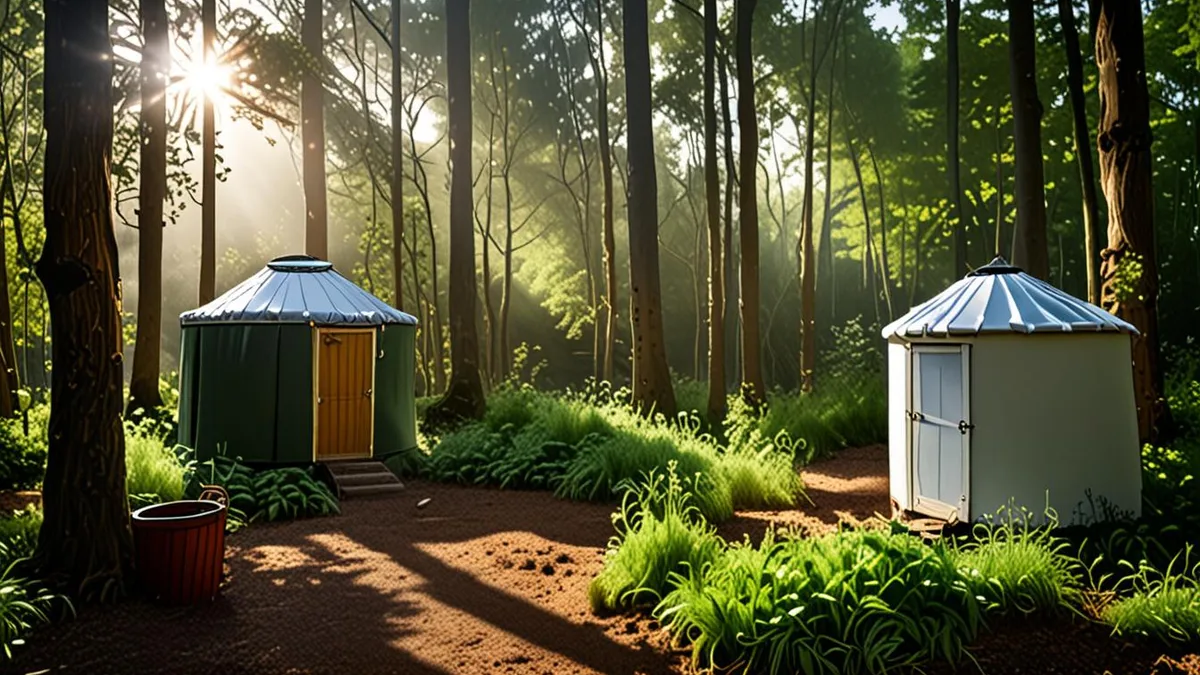
Not all glamping structures treat the land the same way. Yurts and safari tents sit on low foundations, often just wooden decking or ground screws, so they disturb far less soil and vegetation than permanent cabins with concrete bases. When a site is dismantled or moved, the ground underneath can recover. If low impact is your priority, ask how each unit is anchored before you book.
Traveling with children
Family trips benefit from sites that pair eco features with clear facilities and safe layouts. Composting toilets are admirable, but with young kids in tow you will appreciate a site that also offers conventional showers, a straightforward layout with short walking distances between units, and hazards like fire pits and water edges clearly managed. For a fuller walkthrough of what to check, see this guide on how to pick a glamping site for your first family trip.
How is your stay heated?
Heating is where many otherwise green sites quietly slip up. A wood burner in a yurt feels wonderfully cozy, but the fuel source matters. Responsible sites burn sustainably sourced local wood, which supports nearby woodland management and avoids the emissions of haulage. Ask where the logs come from, and whether the site provides them or expects you to bring your own. Electric heating powered by on-site solar can be an equally low-impact choice in well-insulated units, so it is worth understanding how your chosen structure stays warm before you commit.
Booking a Sustainable Glamping Stay with Confidence
The gap between genuine sustainability and clever marketing comes down to evidence. A site that is truly eco-friendly will show you its certifications, explain its energy and water systems, and describe honestly how it manages its land. If that information is easy to find and specific, you can book with far more confidence.
It also pays to plan smart. Shoulder-season dates and sites close to home keep both your costs and your footprint down, and a few direct questions before you pay will quickly separate real commitment from greenwashing. Ask, check the answers against what the website claims, and trust the sites that welcome the scrutiny. If this guide helped you sort the genuinely green from the merely green-tinted, share it with a fellow traveler or leave a comment below.