You’ve found a stunning mountain region for your next trip, and suddenly the booking listings blur together: one property is called a lodge, the next a chalet, and both show photos of wood, fireplaces and snow. The lodge vs chalet question matters more than it first appears, because the two property types differ in layout, who you share space with, what you pay and how much cooking and cleaning lands on you.
This guide breaks down what each one actually is, how rooms compare to whole-house rentals, what typical nightly costs look like, and when to book for the best choice. We’ll also match each option to trip types and destinations, compare service and self-catering levels, and wrap up with a simple way to decide. By the end, you’ll know exactly which one fits your group, your budget and your travel style.
Lodge vs Chalet: What Each One Actually Is
The confusion between these two property types is understandable, because both often feature wood interiors, fireplaces and scenic settings. But they are built around fundamentally different models of accommodation.
What a lodge is
A lodge is a single building or resort-style property that offers individual rooms to guests, much like a hotel with a nature-focused setting. Most lodges have a restaurant, a lounge and staff on site, so you check in, get a room key and let the team handle the rest. The atmosphere leans toward communal: you might swap stories with other guests by the fireplace or over dinner.
What a chalet is
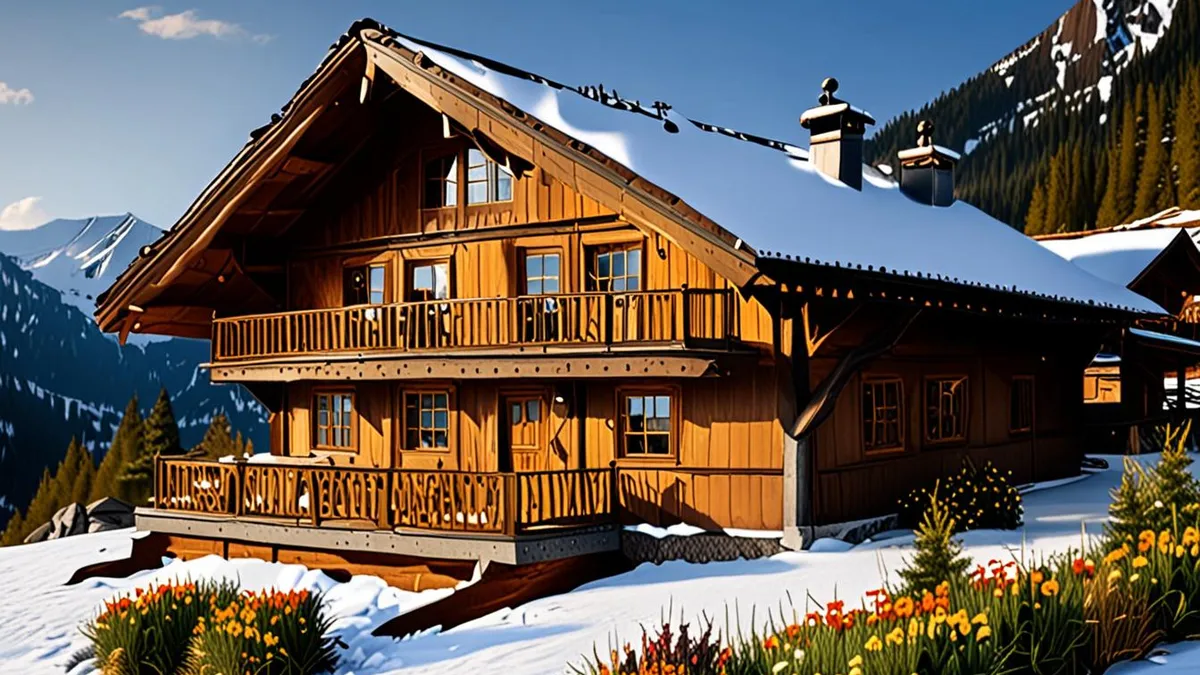
A chalet is traditionally a self-contained alpine wooden house, and it is usually rented whole by one group at a time. You get the entire property: kitchen, bedrooms, living room and often a sauna or terrace. Some chalets are split into apartments, but the classic model is one booking, one group, full privacy.
Geography gives away a useful clue too. Chalets dominate the Alps, Pyrenees and Carpathians, where the wooden-house tradition runs deep. Lodges are spread far more widely, appearing beside lakes, along coasts, in forests and in mountains across Europe and beyond.
Structure and Layout: Rooms vs Whole-House Rental
The biggest practical difference between the two shows up the moment you walk through the door: who else is there, and how much space belongs to you alone.
How a lodge stay is laid out
In a lodge, you book a private room, but the rest of the property is shared. Common areas like fireplaces, terraces and dining rooms are open to all guests, and service feels close to a resort: a front desk, staff on call and set meal times. That structure works well if you’re traveling solo or as a couple, since you get comfort and company without needing to fill a whole building.
How a chalet stay is laid out
A chalet gives your group the run of an entire house. You get a kitchen, multiple bedrooms and a living space that nobody outside your party can use. Evenings unfold on your schedule: cook together, play games, take over the sofa in front of the fire. The trade-off is that you need enough people to make the rental worthwhile.
As a rule of thumb, whole-chalet rentals usually suit groups of 6-12 people, where the per-person cost becomes reasonable and the house feels full. Lodge rooms, by contrast, flex down to one or two travelers easily, which is why they remain the default for smaller parties.
Costs: What You Pay per Night and What Is Included
Price comparisons between lodges and chalets can be misleading if you look at the nightly rate alone, because chalet prices cover an entire house while lodge prices cover a single room. The real number that matters is what each person in your party pays.
European chalet rentals typically cost €150-€600 per night in peak ski season (December-March), and that whole price gets split among your group. A chalet at the top of that range split between ten people can work out cheaper per person than a mid-range lodge room. Lodge stays range roughly €90-€400 per night depending on location and whether meals are included, and rates climb when meals and activities are bundled in.
Food is the other half of the equation. Catered chalets often include half-board (breakfast and dinner), so your food costs are largely covered once you’ve paid. At lodges, meal plans are usually optional or billed separately, so budget for them on top of the room rate.
- Security deposits: whole-chalet rentals sometimes require a damage deposit before arrival, so factor that upfront payment into your cash flow.
- Midweek vs weekend rates: lodge rooms in some regions carry higher weekend pricing, while a week-long chalet booking spreads the cost evenly across your stay.
- Linen and cleaning fees: some self-catered chalets charge a final cleaning or linen fee on top of the nightly rate, so ask before you book.
Season and Booking Windows
Timing matters more when you book a chalet than almost any other accommodation type. Chalet demand peaks from December to March, when ski groups claim the best properties first. For the most sought-after chalets in the Alps, a lead time of 4-6 months is typical. Book later than that and you are usually left choosing between awkward layouts or locations a shuttle ride from the lifts.
Lodges follow a different rhythm, because their high season depends on the setting rather than a single sport. Lakeside, mountain and coastal lodges generally fill up from June through September, and booking 3-5 months ahead is a sensible rule of thumb for summer stays. If you are eyeing a winter property instead, it helps to read up on ski lodges in Europe for winter travelers, since those follow a ski-season calendar closer to a chalet’s.
Using shoulder months to your advantage
May and October are quiet months for lodges, and prices drop noticeably as a result. You trade some weather reliability for emptier terraces and easier bookings. Chalets are the opposite: outside the December-March ski window, many sit empty, and owners either offer steep discounts or close entirely. If your trip is not ski-centered, a lodge is usually the more realistic off-season option.
Choosing by Trip Type and Destination
Start with what your group actually wants to do in the evenings. A chalet works best for ski-centered group trips where cooking, card games and long dinners are part of the plan. You have your own kitchen, a living room with a fireplace, and nobody else’s schedule to work around. That structure suits groups of friends or families who want the holiday to feel like sharing a house, not staying at a hotel.
A lodge fits a different kind of trip. If the goal is nature immersion, guided activities or simply lakeside and coastal quiet, lodges deliver it with staff on hand. Many sit in remote locations where organizing your own hikes, boat trips or wildlife outings would be difficult, so the on-site guides and activity desks earn their keep.
Matching property type to region
Region often decides the question for you. Alpine destinations favor chalets, and you will find them in greatest concentration in the Alps, Pyrenees and Carpathians. Safari, lake and coastal regions favor lodges, where the setting and the service model make more sense than a self-catered wooden house. If your destination is a mountain ski village, look at chalets first; if it is a lakeshore, a coastline or a safari reserve, start with lodges. Fighting the local pattern usually means a thinner choice and higher prices for what is left.
Service, Food and Self-Catering: How Much Work You Take On
The amount of work you take on is one of the biggest practical differences between the two. Chalet stays run on a spectrum. At one end, fully catered chalets include a host, a chef and cleaning, with half-board (breakfast and dinner) usually part of the deal, so your main job is showing up for meals. At the other end, bare self-catering means nothing is provided at all.
If you choose the self-catering route, plan for it honestly. You will do grocery runs, cooking and washing up, often after a full day on the slopes. Many groups divide these tasks on a rota before the trip, which prevents the same two people from cooking every night. In exchange, you get complete control over meals, timings and budget.
What lodge service covers
Lodge stays almost always include daily housekeeping, and many properties offer set dinners served to all guests at a common hour. Meals are typically optional or booked as a separate plan, so you can decide per day whether to eat in or head out. Some lodges, especially in nature-focused destinations, bundle meals and activities together. If you want a sense of how far that model can go, what to expect at an all-inclusive lodge in Costa Rica gives a useful picture of meals, guided excursions and daily service rolled into one rate.
In short, lodge guests trade a little privacy for zero chores, while chalet guests choose how much service to buy. Decide which of those two trade-offs suits your group before you compare prices.
Wrapping Up the Lodge vs Chalet Choice
So the confusion comes down to this: a chalet is a whole alpine house you rent with your group, typically running €150-€600 per peak-season night in the Alps, Pyrenees or Carpathians, while a lodge is a staffed property with individual rooms at roughly €90-€400 per night, set in everything from lakeshores to safari country. If you’re a group of friends or a big family who wants privacy, your own kitchen and evenings in, the chalet wins. If you’re a couple or traveling solo and prefer someone else handling the chores, the lodge is the easier fit.
In the end, the choice rests on three things: your group size, your destination and how much service you want around you. Answer those honestly and the right option picks itself. If this helped you decide, leave a comment or share the article with your travel crew.